

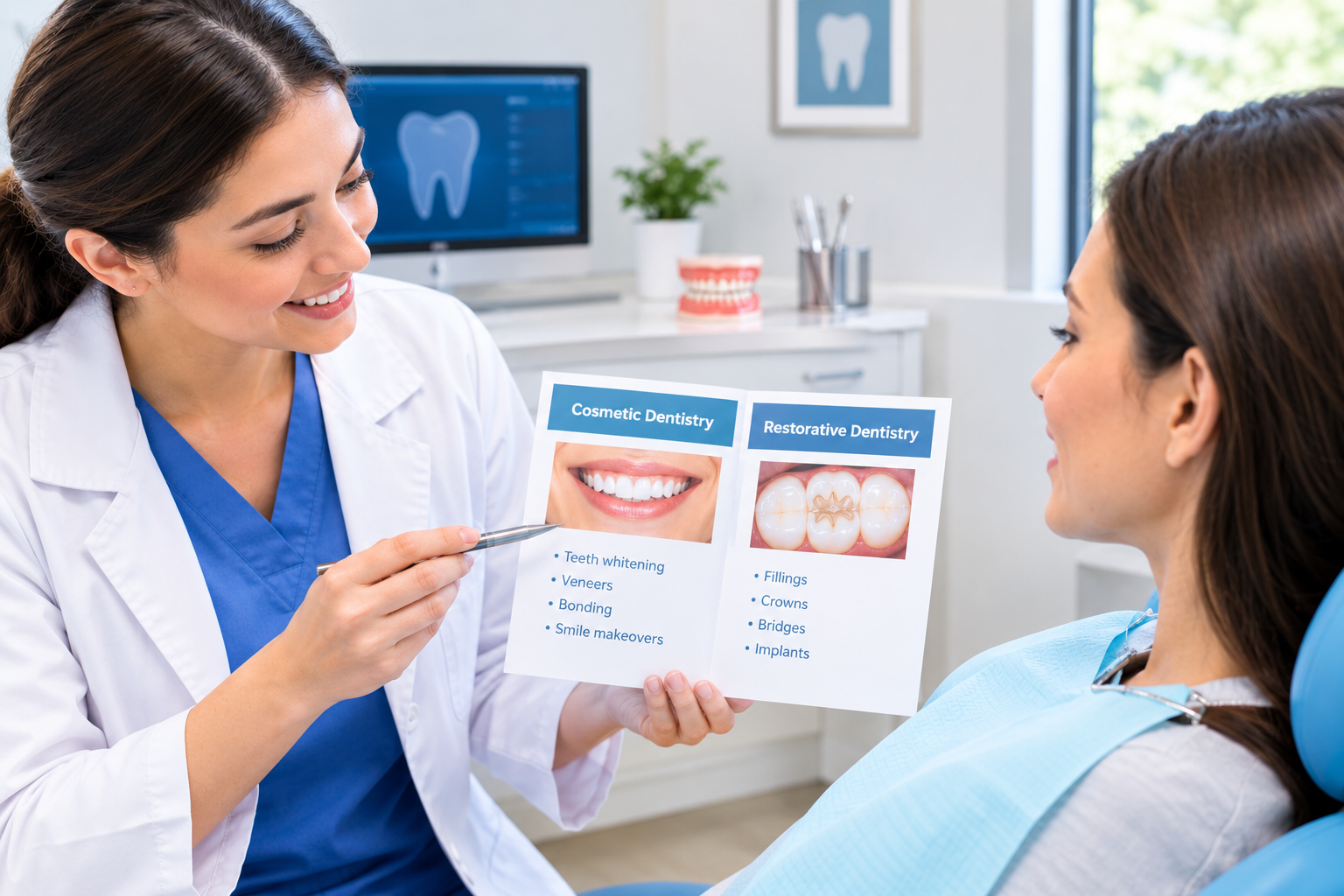
cosmetic dental care and restorative dentistry can both improve your smile, but they do not have the same main purpose. Cosmetic care focuses mostly on how teeth look, while restorative care focuses on repairing damaged or missing teeth and helping them work well. Some treatments can do both. Crowns, bonding, and veneers are good examples because they may restore a tooth while also improving its appearance.
At Oakville Dental Care, patients can discuss cosmetic and restorative options based on their oral health, goals, and treatment needs. The practice provides both types of care, including crowns, composite fillings, veneers, implants, and other services.
Key Takeaways
The main difference is simple: cosmetic dental treatment is usually chosen to improve appearance, while restorative dentistry is used to repair or replace teeth and restore function. The two areas can overlap, so the same treatment may have both health and cosmetic benefits.
- Cosmetic care can improve tooth colour, shape, size, or overall smile appearance.
- Restorative dentistry repairs damage caused by decay, injury, wear, or tooth loss.
- A dental exam helps determine which treatment, or combination of treatments, fits your needs.
What Is Cosmetic Dental Care?
Cosmetic dental care focuses on improving the appearance of your smile. It may address tooth colour, shape, size, spacing, or minor visible imperfections. Some treatments are mainly cosmetic, while others can also support tooth strength or function. The right option depends on your teeth, gums, bite, and the change you want to make.
Common goals of cosmetic dental care include:
- Brightening stained or discoloured teeth
- Improving the shape or appearance of teeth
- Making a smile look more even and balanced
Oakville Dental Care provides cosmetic dental services that include veneers and other smile-focused treatments.
Common Cosmetic Dental Treatments
Common options include professional teeth whitening, veneers, bonding, gum contouring, and certain orthodontic treatments. Veneers, for example, are thin coverings placed over the front of teeth to change their appearance. Oakville Dental Care offers cosmetic services and porcelain veneers as part of its broader dental care. A treatment may be considered cosmetic because appearance is the main goal. However, some procedures also repair or protect teeth. This is why treatment categories can sometimes overlap.
What Is Restorative Dentistry?
Restorative dentistry aims to repair teeth that are damaged, decayed, worn, or missing. The goal is to help restore normal chewing, speaking, comfort, and tooth structure. Depending on the problem, treatment may include fillings, crowns, bridges, implants, inlays, onlays, or dentures.
Restorative care may be recommended when a tooth has:
- A cavity or decay
- A crack, fracture, or large damaged area
- Significant wear or tooth loss
Oakville Dental Care describes restorative dentistry as care for damaged or missing teeth and offers options such as crowns, inlays, onlays, implants, and implant dentures.
Why Restorative Dentistry Matters
A damaged tooth can become harder to treat if a problem is ignored. A restoration can help protect the remaining tooth structure and bring back useful function. For example, a filling can repair a cavity, while a crown can cover and strengthen a more severely damaged tooth.
Cosmetic Dental vs Restorative Dentistry: The Main Difference
The easiest way to compare cosmetic dental care with restorative dentistry is to look at the main reason for treatment. Cosmetic treatment usually starts with an appearance concern. Restorative treatment usually starts with a health, structure, or function concern. Still, there is often overlap because modern dental materials can restore strength while creating a natural-looking result.
Think about the main goal:
- Appearance: cosmetic care may be the focus.
- Function or tooth health: restorative dentistry may be the priority.
- Both: a combined treatment plan may be appropriate.
The final decision should come from a dental assessment rather than the treatment name alone.
Can a Treatment Be Both Cosmetic and Restorative?
Yes. Many dental treatments can serve both purposes. A tooth-coloured filling can repair decay while blending with nearby teeth. A crown can protect a weakened tooth while improving its shape and colour. Veneers may improve the appearance of teeth and can sometimes be used as part of a broader restoration plan. This overlap is why it is better to focus on your dental needs instead of choosing a treatment based only on its label.
Some treatments may offer:
- Improved appearance
- Better tooth structure or protection
- Restored chewing function
Crowns as an Example
Crowns are a clear example of treatment that can be both restorative and cosmetic. A crown covers a damaged tooth and helps restore its shape, strength, and function. Depending on the material, it can also blend closely with surrounding teeth. Oakville Dental Care offers several crown options, including one-visit porcelain crowns, all-ceramic crowns, porcelain-fused-to-metal crowns, and gold crowns.
Fillings as an Example
Fillings are mainly restorative because they repair tooth decay. However, tooth-coloured composite fillings can also improve the appearance of a tooth after decay has been removed. The American Dental Association explains that composite resin fillings can be used on front or back teeth and can provide a more natural appearance. Oakville Dental Care offers composite fillings designed to be durable and blend with the rest of the teeth.
How Do You Know Which Treatment You Need?
Choosing between cosmetic dental care and restorative dentistry should begin with a dental examination. Your dentist can check your teeth, gums, bite, existing restorations, and overall oral health. This matters because a tooth that looks like it needs a cosmetic change may first need treatment for decay, infection, gum disease, or structural damage.
During an assessment, your dentist may consider:
- Your main concern and desired result
- The health and strength of the tooth
- Your bite and surrounding teeth
- The long-term needs of your smile
Oakville Dental Care’s new-patient process includes an oral exam, X-rays, and a discussion of findings and treatment options.
Choosing a Treatment Based on Your Smile Goals
Your goals can help guide the conversation, but they should not be the only factor. If you mainly want whiter teeth, whitening may be considered. If a tooth is broken or weakened, restorative treatment may be more important. If several concerns are present, your dentist may suggest a staged plan that combines different treatments.
A good treatment plan should consider:
- Oral health first
- Appearance and natural-looking results
- Comfort and daily function
- Long-term maintenance
For more information about available options, explore Oakville Dental Care’s restorative dentistry services.
Why Professional Evaluation Matters
It can be tempting to choose a treatment because it is popular or because you like the result shown in a photo. However, every mouth is different. Tooth structure, gum health, bite, previous dental work, and the amount of healthy enamel can affect which option is suitable. A professional evaluation helps you understand what a treatment can and cannot do. It also gives you a chance to ask about alternatives, expected results, maintenance, risks, and costs before moving forward.
Questions to Ask Your Dentist
Before treatment, ask clear questions so you understand the plan. Your dentist can explain why a particular procedure is recommended and whether another option could work.
Consider asking:
- Is the treatment mainly cosmetic, restorative, or both?
- Do I need to treat a dental health problem first?
- How will the treatment affect my bite and natural teeth?
- What care will I need afterward?
Final Thoughts on Cosmetic Dental and Restorative Care
Cosmetic dental care and restorative dentistry have different primary goals, but they often work together. Cosmetic treatments can improve the appearance of your smile, while restorative treatments repair or replace damaged teeth and restore function. Some treatments, such as crowns and tooth-coloured fillings, can provide both benefits.
The best choice depends on your oral health, smile goals, bite, and long-term needs. At Oakville Dental Care, patients can discuss available options and build a treatment plan based on their individual needs. Ready to understand which option fits your smile? Contact Oakville Dental Care today to schedule a consultation and discuss your dental needs.
Frequently Asked Questions
Is cosmetic dental care only about appearance?
Not always. Appearance is usually the main goal, but some cosmetic treatments can also improve tooth shape, strength, or function. For example, a treatment may repair a small defect while making the tooth look more natural. Your dentist can explain whether your preferred procedure is mainly cosmetic or offers both cosmetic and practical benefits.
Is restorative dentistry only for damaged teeth?
Restorative dentistry focuses on repairing or replacing damaged, decayed, worn, or missing teeth and restoring useful function. Treatment may also improve the appearance of a tooth. For example, a modern crown can protect a weakened tooth while matching the colour and shape of nearby teeth, helping the restored smile look natural.
Can crowns be both cosmetic and restorative?
Yes. Crowns can protect and strengthen damaged teeth while also improving their shape, colour, and overall appearance. This makes them a useful example of how the two treatment categories can overlap. The reason for placing the crown may be structural, cosmetic, or both, depending on the condition of the tooth and the patient’s goals.
Are fillings considered cosmetic or restorative?
Fillings are mainly restorative because they repair decay. Tooth-coloured fillings can also provide a more natural-looking result. The material and treatment approach can depend on the size and location of the cavity, the tooth involved, and your dentist’s clinical judgment. Your dentist can explain which filling material best fits your needs.
How do I know which treatment is right for me?
A dental examination can help identify your oral health needs and explain which treatment or combination of treatments may be suitable. Your dentist can assess your teeth, gums, bite, and existing dental work before recommending a plan. This helps ensure that cosmetic goals do not overlook problems that need restorative or preventive care first.